Treasury management for fintech is the work of tracking, moving, and protecting company cash and customer funds across bank accounts, payment rails, and currencies, while keeping an accurate ledger and a clear record for your sponsor bank.
That definition sounds simple. In practice, it is where many fintech programs succeed or fail. A fintech holds other people’s money. Balances change every second. Payments can leave a program at any hour of the day. And a bank, a regulator, or a customer can ask where every dollar sits.
This guide explains what fintech treasury management includes, how it differs from corporate treasury, which U.S. rules matter, and what to ask any provider before you commit. It also explains how we at PRETpayments approach the problem.

Key takeaways:
- Customer funds come first. Fintech treasury covers customer funds and company funds, not company cash alone. When Synapse failed in 2024, its trustee reported that partner banks held about $180 million against about $265 million owed to customers.
- Ledger and bank must agree daily. When they do not, customers pay the price. The Synapse trustee later estimated a shortfall of $65 million to $96 million.
- Insurance has limits. FDIC pass-through insurance covers up to $250,000 per owner per ownership category, and only when records clearly show who owns what. It protects against bank failure, not fintech failure.
- Liquidity now runs 24/7. FedNow carries up to $10 million per transaction, and in the first quarter of 2026 RTP and FedNow together processed about $751 billion.
- Bank visibility is a design choice. Regulators are watching it: the Federal Reserve’s June 2024 order against Evolve Bank cited weak risk management of fintech partnerships, and FinCEN proposed new AML/CFT program rules in April 2026.
What Is Treasury Management for Fintech?
Treasury management is how an organization controls its cash, liquidity, payments, and financial risk. For a fintech, the same discipline covers a wider surface:
- Operating cash that belongs to the company
- Customer funds held in custodial or for-benefit-of accounts
- Pay-ins, payouts, and settlement across several rails
- Currency exposure when money crosses borders
- Records that a sponsor bank and its examiners can verify
A treasury management system for a fintech is the set of accounts, ledgers, payment connections, controls, and reports that make this work. Some teams build it in house. Others use a banking-as-a-service platform that bundles it.
The market for this kind of software is sizable and growing. Stratistics MRC estimates the global treasury management systems market at $6.53 billion in 2026, rising to $15.24 billion by 2034, an 11.9% compound annual growth rate. Estimates differ by research firm, but they point the same way.
Why Fintech Treasury Management Differs From Corporate Treasury
A corporate treasurer manages the company’s own money. A fintech treasury team manages that and a pool of customer money it does not own. Four differences follow from that fact.
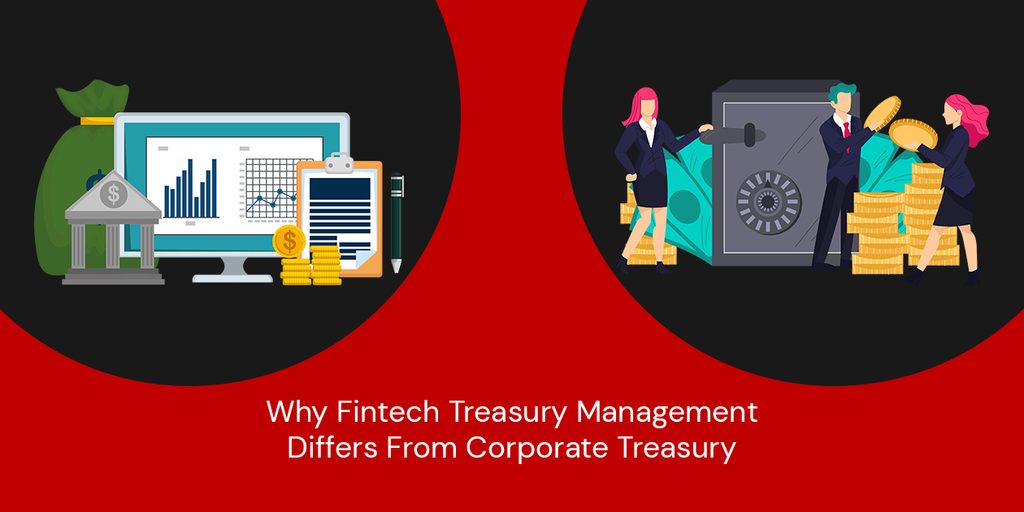
- Customer funds sit at the center. Balances in a wallet, a payout account, or a program account belong to end users. The fintech acts as an agent or custodian. Every balance has to be traceable to a person or business.
- Money moves around the clock. Card networks, instant payment rails, and stablecoin transfers do not wait for business hours. Treasury has to keep funds in the right place at the right time on weekends too.
- The bank is a partner and a supervisor. A sponsor bank wants to see the customer, the program, the transactions, and the compliance record. If it cannot, it may restrict the program.
- The ledger is a regulated asset. In a traditional company, the general ledger supports reporting. In a fintech, the ledger decides who gets paid back if something goes wrong.
Core Components of a Treasury Management System for Fintech
A complete setup covers seven areas. Each one answers a different question your bank, auditor, or customer may ask.
Cash Flow Visibility and Positioning:
Cash flow visibility means one view of balances across every account, bank, and rail, updated as money moves instead of after an overnight batch. It answers the question: how much do we hold right now, and where?
Without it, teams build spreadsheets. Spreadsheets drift out of date within hours.
Ledgering and Reconciliation:
The ledger records which customer owns which dollar. Reconciliation proves that the ledger matches the bank’s records. Daily reconciliation is the baseline. The FDIC’s 2024 custodial-account proposal would make it a requirement for covered accounts, and it is a sound practice even before any rule is final.
Liquidity Management for Fintech:
Liquidity management for fintech is the discipline of having enough cash in the right account at the right time. Payouts often need to be prefunded. Pay-ins can settle on a different schedule than the payouts they support. A gap between the two can stall a program.
Strong liquidity planning includes buffers, funding alerts, and a clear process for moving money between accounts.
Payments and Settlement:
Treasury has to connect to the rails your product uses. That can include ACH, domestic wires, real-time payments, SWIFT, card payouts, and stablecoin transfers. Each rail has its own timing, cost, and risk. Orchestration, meaning one layer that routes payments to the right rail, keeps treasury from becoming a patchwork of vendors.
This matters most in embedded finance programs, where a software platform offers accounts or payouts to its own users and one treasury layer sits behind many customer flows.
Foreign Exchange:
When customers pay or get paid in different currencies, treasury takes on FX exposure. The core questions are who sets the rate, when it locks, and how conversions are recorded in the ledger.
Compliance Controls:
Treasury and compliance cannot run apart. Funds movement should sit inside KYC and KYB checks, AML and Bank Secrecy Act workflows, sanctions screening, and transaction monitoring. Controls that live outside the treasury flow tend to be the ones that fail.
The rules are also moving. In April 2026, FinCEN proposed a rewrite of the AML/CFT program rules under the Bank Secrecy Act, published in the Federal Register on April 10, 2026 (91 FR 18704). The proposal would require programs to be effective and risk-based, and it would allow 12 months to implement after a final rule. It would also give FinCEN a larger role in how bank AML/CFT programs are supervised, which is one more reason your sponsor bank will ask for clean records. Comments closed on June 9, 2026, and as of November 2026 we have not found a final rule. Programs that already tie transaction monitoring to funds movement will have less to rebuild.
Reporting and Audit Trails:
Sponsor banks, auditors, and examiners ask for records. Treasury should produce balance reports, transaction histories, and audit trails without a scramble.
Some providers also focus on earning yield on idle balances through sweep or money market arrangements. Whether that is possible depends on the program structure, the sponsor bank, and the rules covering customer funds. It is one possible layer, not the foundation.
Banking as a Service Treasury: Where Sponsor Banks Fit
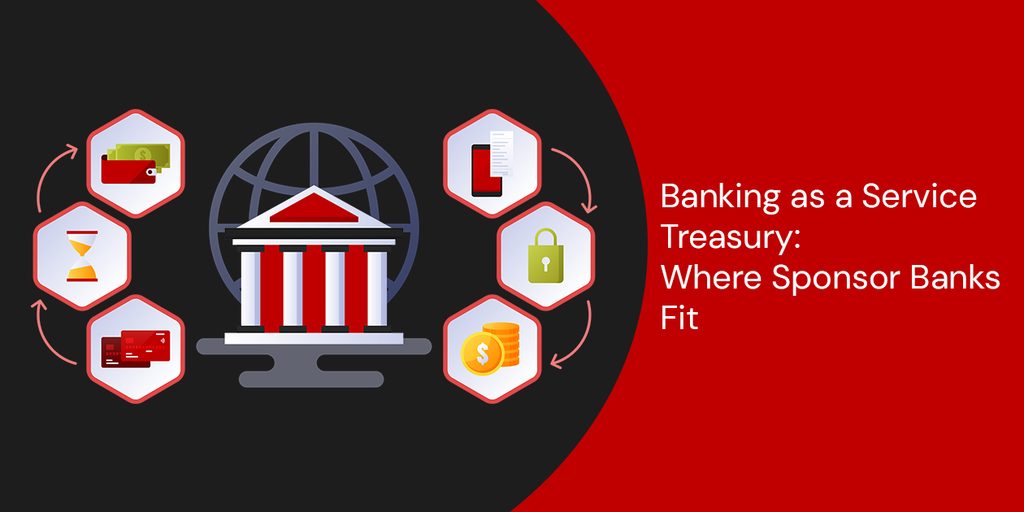
Most fintechs do not hold a bank charter. They rely on a sponsor bank to hold deposits and give access to U.S. payment systems. That is the heart of banking as a service treasury: the fintech runs the customer experience, and the bank holds the regulated accounts.
This structure creates a shared duty. The fintech tracks customer balances. The bank holds the money and answers to regulators. Both sides need to see the same numbers.
When programs are bundled under one opaque master program, the bank sees less. Concentration risk goes up and oversight gets weaker. A structure with separate, controlled sub-programs gives the bank a clearer view of each customer group and each flow of funds.
FDIC Pass-Through Insurance and FBO Account Reconciliation
Many fintechs hold customer funds in an omnibus account at a bank, often called a custodial or for-benefit-of (FBO) account. The FDIC explains that pass-through insurance covers the real owners of those funds, up to $250,000 per ownership category, but only when the requirements are met. If they are not met, the FDIC says the deposits are combined with the third party’s other deposits and insured only up to $250,000 in total.
Three points matter for treasury teams:
- The bank’s records must show the custodial relationship. The account records need to disclose it.
- Each owner’s interest must be ascertainable. That depends on an accurate ledger.
- Insurance covers bank failure, not fintech failure. A non-bank partner should never imply otherwise.
The rulebook is also changing. In 2024, the FDIC proposed new recordkeeping rules for custodial accounts with transactional features. The proposed rule would require banks to keep owner-level records and reconcile them regularly. As of November 2026, the FDIC lists the rule as a long-term action, with no final rule date set. Programs that already reconcile daily will be ready whichever way it lands.
Real-Time Payments and Stablecoin Treasury at 24/7 Speed
Instant payments have moved from novelty to infrastructure. The Federal Reserve raised the FedNow transaction limit to $10 million in November 2025. As of July 2026, FedNow reported more than 1,800 participating banks and credit unions, up from more than 1,600 in January. In the first quarter of 2026, RTP processed 128 million transactions worth $480 billion, while FedNow processed 2.7 million worth $271.3 billion, according to Digital Transactions. Each bank can still set lower limits based on its own risk rules.
For treasury, that means funds can leave a program in seconds on a Sunday night. Balances need to be funded before the payment, not after.
Stablecoin treasury adds another layer. Programs that use stablecoin wallets, on-ramps, and off-ramps need those flows tied back to real USD accounts, so the ledger, the bank, and the digital-asset side all tell the same story. The same principle applies as with any rail: every movement is recorded, reconciled, and visible to the bank.
Case Study: What the Synapse Collapse Taught the Industry About Treasury Controls
The clearest recent example of treasury failure in fintech is Synapse, a middleware company that connected fintech apps to partner banks.
What happened?
Synapse filed for Chapter 11 bankruptcy in April 2024. In June 2024, the court-appointed trustee reported that partner banks held about $180 million in customer funds while customers were owed about $265 million, a gap of roughly $85 million. Later trustee reports put the estimated shortfall at about $65 million to $96 million.
Why it was so hard to fix?
Synapse spread end-user funds across several banks, so one customer could have balances at more than one institution. One partner bank struggled to reconcile its deposits against Synapse’s proprietary ledger because of its complexity. The parties disputed responsibility in court filings, and many end users lost access to their funds for months.
How regulators responded?
In June 2024, the Federal Reserve Board and the Arkansas State Bank Department issued a consent cease-and-desist order against Evolve Bancorp and Evolve Bank & Trust, one of Synapse’s partner banks. The order cited the lack of an effective risk management framework for fintech partnerships and weak anti-money-laundering and consumer compliance controls, and it barred new fintech partnerships without regulatory approval. The Fed said the action was independent of the Synapse bankruptcy. It still showed how closely supervisors now watch the way sponsor banks oversee their fintech programs.
What it means for treasury?
- One ledger, one owner is a risk. When only a middleware layer holds the record of who owns what, the bank cannot verify it on its own.
- Daily reconciliation is not optional. Gaps that grow quietly become shortfalls that no one can explain.
- Funds spread across many banks need one clear map. Complexity is the enemy of recovery.
- Bank visibility protects everyone. Customers, the fintech, and the bank all benefit when records can be checked independently.
These lessons shaped how many programs now evaluate treasury partners, and they are why ledger design belongs in the first conversation, not the last.
How We Approach Treasury Management Solutions for Fintech at PRETpayments
At PRETpayments, we build U.S. banking infrastructure for global fintechs, money services businesses, wallet platforms, and stablecoin companies. We are not a card acquirer, a checkout product, or a generic payment processor. We are the orchestration layer between sponsor banks, customer programs, payment vendors, liquidity providers, and compliance partners.
For treasury, the choice that matters most is where the record of who owns what lives. We keep it inside each program from day one, and we build the rest of the treasury flow around it.
- Program structure answers treasury questions. We structure approved programs as a hierarchy of controlled sub-programs, each with named accounts and its own ledgering and reporting. The sponsor bank can approve, restrict, monitor, and govern the regulated services in each one. A question like “how much do we hold for this customer group?” then has one answer.
- Funding and payouts run in one layer. Pay-ins, payouts, FX, liquidity, and stored balances sit on one platform, so a team can see a funded balance before it releases a payout. Through our payment gateway, programs can reach SWIFT, stablecoins, cards, RTP, Visa Direct, and ledger payments.
- Compliance sits inside the flow. KYC and KYB, AML and BSA workflows, sanctions screening, transaction monitoring, RFI handling, reporting, and audit trails sit alongside the money movement, not in a separate silo.
An illustrative example (not a client case). Picture a wallet platform that serves consumers and small merchants. We would set up each group as its own sub-program with named accounts. Merchant payouts go out over RTP at any hour, so the platform keeps the payout account funded from the merchant sub-program’s own balance, and reports show the bank the balance it can verify. If the sponsor bank needs to restrict one group, it can act on that sub-program without touching the other.
Every program we work with goes through approval, and sponsor-bank review decides what a program can do. Banking services are provided through our bank partners. PRETpayments is a financial infrastructure company, not a bank. FDIC insurance applies to deposits held at FDIC-insured banks, covers the failure of the bank only, and is subject to the conditions described above.
How to Choose a Treasury Management System for a Fintech
Use this table as a quick screen when you compare providers.
| Capability | Why it matters | What to ask |
| Ledger design | Defines who owns each dollar | Who holds the system of record, and can the bank view it directly? |
| Reconciliation | Catches gaps early | How often is it run, and who reviews breaks? |
| Bank visibility | Keeps the sponsor bank comfortable | Does the structure separate programs and sub-programs? |
| Payment rails | Controls speed, cost, and reach | Which rails are live today, including real-time and cross-border? |
| Liquidity tools | Prevents stalled payouts | How do you prefund payouts and monitor balances? |
| Compliance integration | Reduces risk and rework | Are KYC, AML, and monitoring part of the same flow? |
| FDIC and disclosures | Avoids misleading customers | How do you describe pass-through coverage and its limits? |
| Reporting | Speeds up audits | What reports and audit trails can I export? |
| Scope fit | Avoids paying for the wrong product | Is the product built for funds movement, investing idle cash, or both? |
Two more habits help. Ask for a walk-through of a failure scenario, such as a rail outage or a ledger break. And ask how the provider would support you if your sponsor bank asked for records on short notice.
Frequently Asked Questions
1. What is treasury management for fintech?
Treasury management for fintech is the practice of controlling company cash and customer funds across accounts, payment rails, and currencies. It covers cash visibility, ledgering, liquidity planning, payments, FX, compliance controls, and reporting that a sponsor bank can verify. The goal is to know where every dollar sits at any time.
2. How is fintech treasury management different from corporate treasury?
Corporate treasury manages the company’s own cash. Fintech treasury also manages customer funds held as an agent or custodian, runs on 24/7 rails, and must give a sponsor bank clear records. The ledger therefore carries regulatory weight, not just reporting value, because it shows who owns each dollar.
3. What is a treasury management system for fintech?
It is the combination of accounts, ledgers, payment connections, compliance controls, and reports used to manage company and customer funds. Fintechs either build it in house or use a banking-as-a-service platform that bundles these parts. Either way, it must let the bank and the fintech see the same balances.
4. Are customer funds in a fintech account FDIC insured?
Only if the funds are held at an FDIC-insured bank and the pass-through requirements are met, including records that show each owner’s interest. Coverage is up to $250,000 per owner per ownership category. It protects against bank failure, not against the failure of the fintech.
5. Can fintechs use real-time payments for treasury?
Yes, if their bank participates. FedNow allows up to $10 million per transaction as of November 2025, and RTP also supports $10 million, though individual banks can set lower limits. Treasury teams must prefund accounts, because instant payments cannot be pulled back easily.
6. What should I ask a banking-as-a-service provider about treasury?
Ask who holds the ledger, how often funds are reconciled, and how the sponsor bank sees program activity. Also ask which rails are live and how compliance checks connect to funds movement. Finally, ask what reports and audit trails you can export on short notice.
Build Treasury Controls Your Bank Can See
Good treasury is not about the most features. It is about clear records, steady liquidity, and a structure a sponsor bank can trust. Programs that get those three right can add rails, currencies, and products without losing control.
If you run a fintech, MSB, wallet, or stablecoin platform and want a U.S. banking structure built around that idea, you can start with a corporate application, and we will review your program for sponsor-bank fit.
One thought on “Treasury Management for Fintech: How to Control Cash, Liquidity, and Compliance in 2026”